


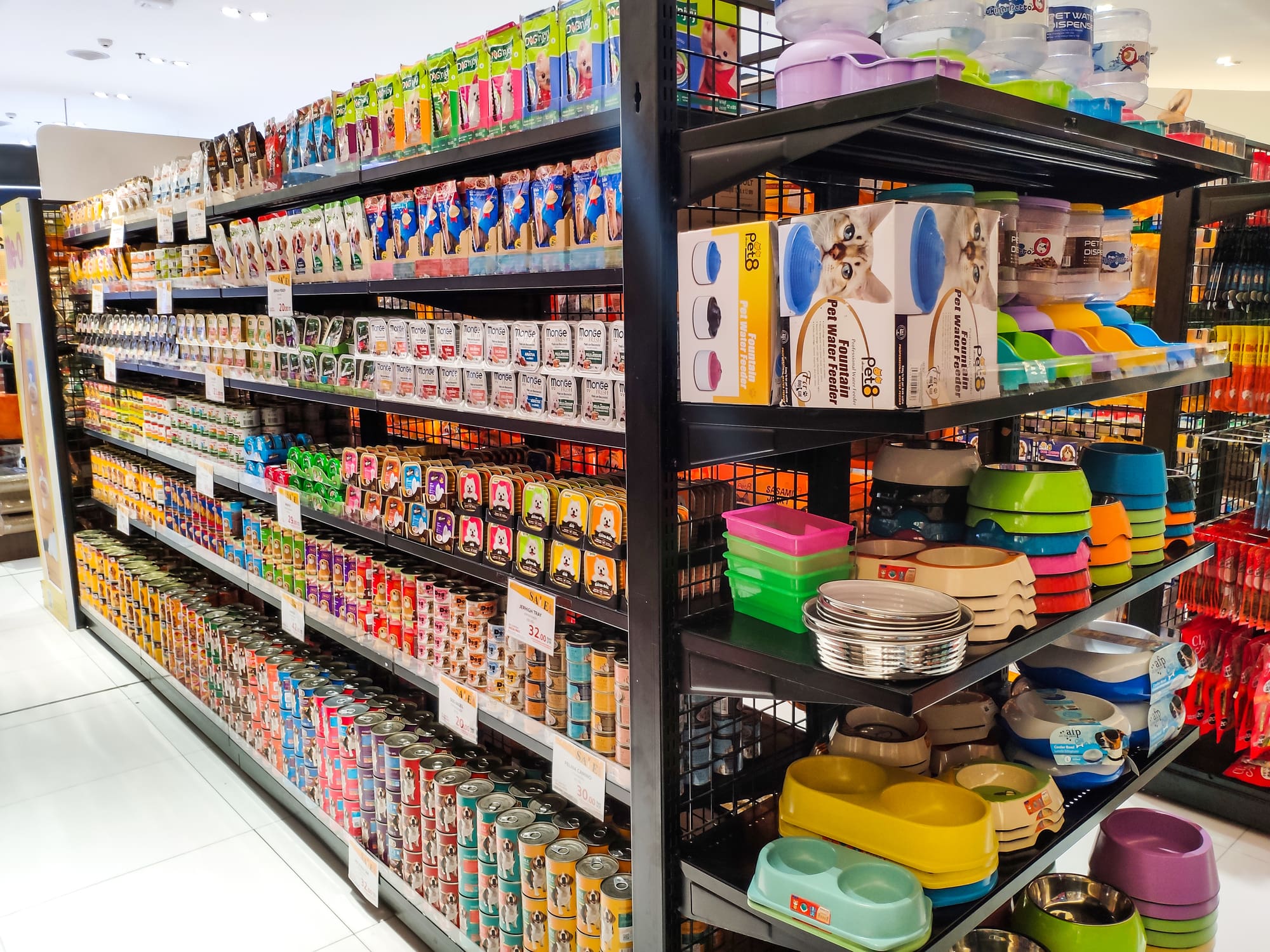
Short answer: An endcap is a display placed at the end of aisles in a retail store. These areas are considered prime real estate because they immediately boost product visibility, encourage impulse purchases, and draw customer attention to featured products, new items, or sale items.
Endcaps play a major role in how shoppers move through a retail environment. Customers naturally pause at the end of aisles, making these high-traffic areas ideal for highlighting popular products or seasonal items. A well-designed end cap display can introduce shoppers to items they might have missed on the shelf, helping retailers guide buying decisions without interrupting the flow of the store.
Retailers often rely on endcaps to strengthen customer engagement, promote promotions, and support retail marketing strategies. Throughout this blog, we’ll look at what makes an effective endcap, how packaging influences success, and why thoughtful design can elevate the entire shopping experience.
Understanding Endcap Displays: Purpose, Placement, and Product Strategy
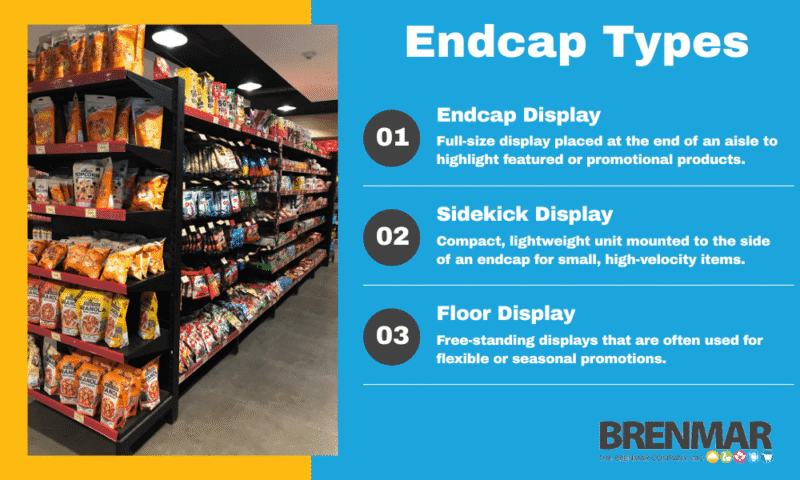
Endcap displays are simple in structure but powerful in purpose. An endcap display sits at the end of an aisle and faces open traffic rather than another shelf. A sidekick display is a smaller unit that hangs on the side of an endcap, usually used for lightweight or grab-and-go items. A floor display stands on its own and can be placed anywhere in a retail space, including high-visibility entry areas. Each type serves a different merchandising need, but endcaps remain the most recognized tool for driving quick shopper attention.
Endcaps are valuable because they sit in the highest-traffic zones of a retail store. Shoppers naturally slow down at the end of aisles, which turns this space into top-tier real estate for featured product placement. The position alone creates a moment of pause that standard shelf or wall displays rarely achieve.
How Retailers Use Endcaps to Influence Buying Decisions
In a grocery store, endcaps often hold promotional items tied to weekly ads, holidays, or meal solutions. General retail environments use endcaps to support brand awareness or introduce a product line that customers may not notice inside the aisle. Both rely on the same principle: good placement influences buying behavior.
A custom end cap display can significantly boost sales by turning a single featured product or promotion into a focal point. When packaging, signage, and layout work together, a retailer can turn a routine aisle stop into an impulse purchase moment. Shoppers tend to make decisions faster at the end of aisles because the display feels separate from regular shelf space, creating a sense of urgency and interest. This shift in behavior is one reason endcaps remain one of the most effective retail display tools for driving results.
What Makes an Effective Endcap? Principles of Good Retail Display Design
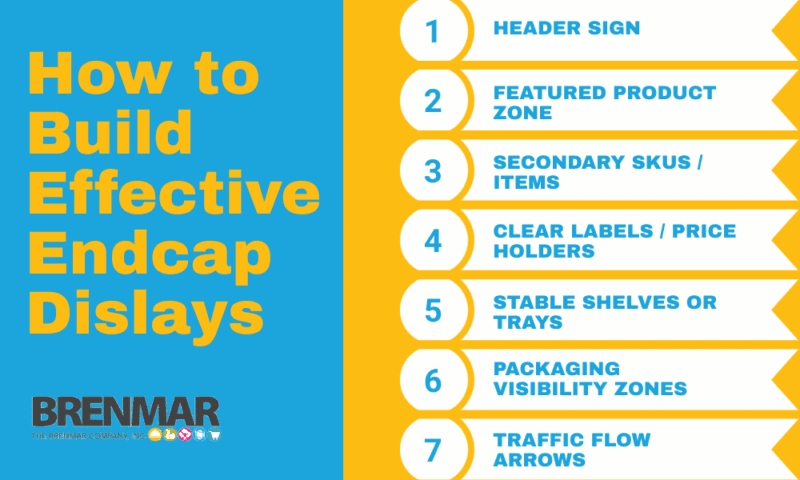
An effective endcap starts with an eye-catching design. Clear signage, bold packaging colors, and visible brand names help shoppers recognize what’s being promoted without having to slow down. Strong labels and simple messaging make the featured product easy to identify, which is especially important in high-traffic areas. The goal is to capture attention quickly while still keeping the display organized and easy to shop.
Packaging plays a major role in the success of an endcap display. Bright colors, clean graphics, and readable information improve product visibility from several feet away. Retailers often use digital printing, brand colors, and visual cues to create a pop display that feels intentional and inviting. A good endcap blends creativity with function, meaning it looks appealing but still supports straightforward stocking, rotation, and replenishment.
Design With a Clear Purpose and Simple Message
Retailers see the best results when an endcap focuses on one message at a time. That could be a promotion, a sale, or a single featured product. When an endcap tries to do too much, customers lose interest. A streamlined layout keeps the display looking full and prevents visual clutter.
Keeping the display easy to restock is just as important. Endcaps sit in high-traffic areas, so they empty quickly. Planning for quick replenishment helps maintain a clean presentation throughout the day and keeps the display functioning the way it’s intended.
Endcaps are also an ideal place to introduce a new product. Shoppers notice new items faster at the end of aisles than they do within standard shelf space. By structuring the display around the natural flow of the retail environment, retailers can guide customers toward products they want highlighted.
Effective endcap placement can also vary across the store. A grocery store might position a breakfast promotion near the dairy aisle, while a general retailer may place a seasonal display near a main walk path. The best locations support how customers move through the space and help turn everyday stops into moments of discovery.
Designing Endcaps With Packaging in Mind: Practical Tips for Retailers
Packaging is the foundation of any effective endcap display. Even the most eye-catching design can fall short if the packaging doesn’t support visibility, stocking, and ease of shopping. When customers walk through high-traffic areas, they make quick decisions. Packaging that’s clear, readable, and consistent helps them understand what’s being offered in seconds, improving the overall shopping experience.
Good packaging also determines how well a product fits the dimensions of an end cap display. The size, height, and structure of the package need to align with the shelf space so the display looks organized and stays stable throughout the day. Packaging that’s too tall or too wide disrupts the layout, while packaging that fits cleanly creates a polished look that encourages customer engagement.
Packaging features can support merchandising in several ways. Clear fronts help shoppers see the product instantly. Bold labels and transparent windows make it easier to recognize what’s inside. Color blocking helps build brand awareness, especially when the entire endcap uses coordinated packaging that draws the eye. Even barcodes matter; when placed in the right location, they speed up scanning and reduce handling time for staff.
Turning Packaging Choices Into a Better In-Store Display
Structural packaging choices also play a key role. Stronger materials help the product hold its form, reducing damage and keeping the display neat. Retailers often rely on magnetic mounting systems, hooks, or trays to build creative displays that work well with packaging choices. Shelf-ready packaging can simplify labor by letting staff restock quickly without having to remove multiple layers of material.
Packaging should also support different display types, whether it’s a sidekick display, a way endcap arrangement, or a seasonal feature. Seasonal items often benefit from brighter colors or limited-time messaging, while a new item launch may need larger labels or an attention-grabbing visual to introduce the product.
When packaging works well, it lightens the workload for employees. It reduces the time needed to restock, helps displays stay neat, and makes it easier for shoppers to browse without confusion. Packaging also influences promotion and product storytelling. A well-designed label can highlight flavors, benefits, or ingredients in a way that supports the story the endcap is trying to tell.
To see how this comes together, imagine a brand introducing a new snack item. The packaging uses bold colors that match the brand, a clear front window to show the product, and a compact size that fits three rows across the shelf. The barcodes sit in the same position across all units. When these packages are stacked on an endcap display, they look consistent, clean, and easy to shop. The result is a display that stands out, stays full, and helps turn a new product into a featured item that customers notice right away.
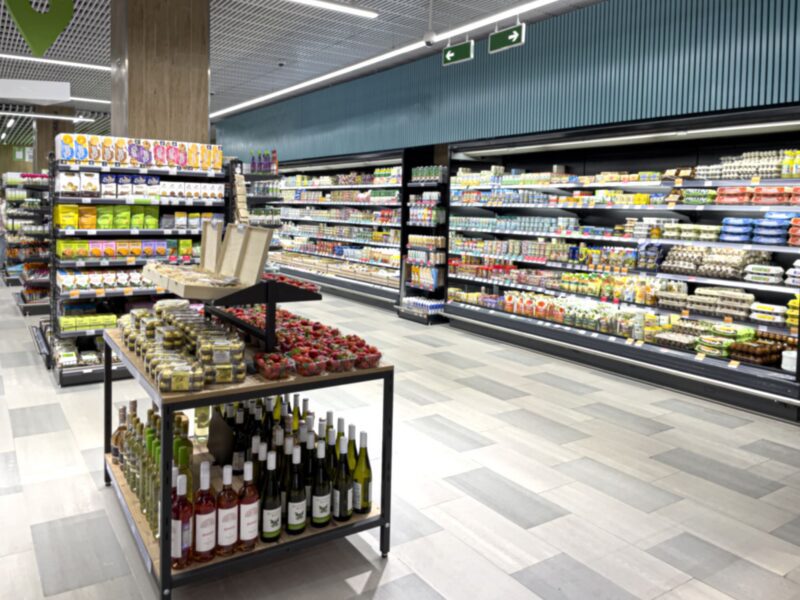
Bringing It All Together: How Brenmar Helps Retailers Build Better Endcaps
For more than 35 years, Brenmar has supported retailers, grocery stores, and food businesses with packaging and retail display products built for everyday retail demands. Endcap displays perform best when the packaging and display materials work together; both need to be dependable, easy to stock, and designed to improve visibility. When these elements align, an endcap comes together faster, stays organized longer, and holds up through heavy foot traffic.
Retailers rely on Brenmar because we keep a wide range of in-stock packaging and display supplies ready to ship. Our selection includes bakery containers, deli and produce packaging, takeout options, and promotional display materials. We also carry gondola merchandising supplies, shelf management tools, sign supplies, and other shelving essentials that help retailers design displays with cleaner lines, stronger visibility, and better organization. Each product is chosen to support a polished presentation on the sales floor.
Our team offers knowledgeable support to help retailers select packaging and display products that elevate both endcap performance and the overall shopping experience. We’ve helped businesses of all sizes create endcaps for seasonal items, popular products, promotions, and new item launches across a variety of store formats. Whether the goal is boosting sales, improving product visibility, organizing shelf space, or simplifying restocking, Brenmar provides solutions that help displays stay full, consistent, and appealing.
If you’re looking to build endcaps that connect with shoppers and support your merchandising goals, Brenmar is ready to help. Explore our packaging, gondola merchandising supplies, and retail display products, or reach out for expert guidance on designing endcap displays that make a meaningful impact in your retail space.