



Key Takeaways: Proper TCS (Time and Temperature Control for Safety) food storage requires maintaining specific temperature ranges and using appropriate storage containers. Following established food safety guidelines and using quality packaging materials prevents bacterial growth while maintaining TCS food safety standards.
Various foods can grow harmful bacteria if they’re not stored correctly. TCS foods include dairy products, meat, cooked vegetables, and any prepared dish because they all require certain temperatures to stay fresh enough for consumption. These foods often make up a large portion of any operation where food preparation happens.
Poor storage practices lead to significant food waste, reduced profits, and potential foodborne illness risks for customers. Understanding proper TCS food storage methods helps prevent these issues while meeting health department requirements.
The fix? Stick to tried-and-true food safety basics: know your temperature zones, use the right containers, and stay organized. Let’s break it down.
Temperature Control Fundamentals
Temperature Danger Zone Basics
Food safety starts with proper temperature control. Harmful bacteria multiply fastest between 40°F and 140°F (4°C to 60°C), making this range the temperature danger zone. Cold TCS foods must stay at or below 40°F, while hot-holding equipment needs to maintain temperatures of 140°F or higher to prevent bacterial growth.
Different TCS foods require specific temperature ranges:
- Meat and poultry: Store at or below 40°F
- Fresh produce and leafy greens: Maintain at 32-40°F
- Frozen foods: Keep at 0°F or below
- Dairy products: Store between 34-38°F
Monitoring temperatures isn’t a one-and-done deal. Food handlers should check at least every 4 hours using calibrated thermometers. Keep detailed logs with food item, temp, date, time, and who checked. If it’s not written down, it didn’t happen.
Storage Zone Organization
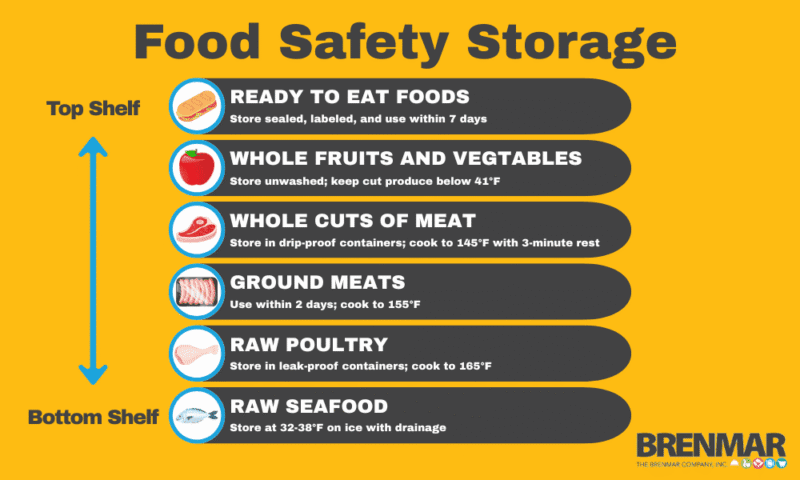
Proper storage prevents cross-contamination and maintains food safety. Arrange potentially hazardous food from top to bottom in this order:
- Ready-to-eat foods
- Whole fruits and vegetables
- Whole cuts of meat
- Ground meats
- Raw poultry
- Raw seafood
When storing TCS foods in freezers, it’s essential to follow specific safety requirements to maintain optimal food quality. Clearly label items with their contents and expiration date, and store them in transparent containers to make identification quick and easy.
Proper maintenance of dry storage areas requires careful attention to environmental conditions. These areas should be kept at temperatures between 50-70°F with humidity levels maintained below 60%. Good ventilation is crucial, and all food items must be stored at least 6 inches off the floor. The shelving should be arranged to facilitate a first-in, first-out rotation system, ensuring older products are used before newer ones.
Organize products by category and use date to reduce waste and maintain inventory control. Store chemicals and cleaning supplies separately from food items, preferably in a different room or designated area.
Storage Container Selection
Container Types and Uses
Not all containers are created equal. In commercial kitchens, professional-grade plastic containers with tight lids are your go-to. They stack, they seal, and clear ones let you spot what’s inside fast. Clear containers help food handlers quickly identify contents without opening lids.
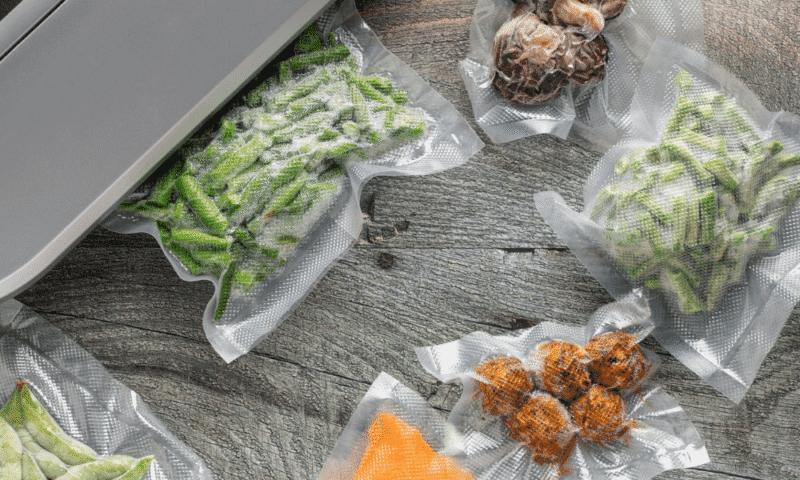
Vacuum-sealed packaging works well for extending shelf life of meats, dairy products, and prepared foods. This method removes air that can lead to bacterial growth and helps maintain food quality. Vacuum sealing is particularly useful for items that will be stored for extended periods.
The choice between disposable and reusable containers depends on your operation’s needs. Disposable containers work well for takeout orders and temporary storage. Reusable containers, while requiring more initial investment, reduce waste and often prove more cost-effective for daily kitchen operations.
Material Considerations
Food-grade materials are non-negotiable for TCS food storage. Look for containers marked with the FDA food code symbol or explicitly labeled as food-grade. These materials won’t leach chemicals into food and can handle regular sanitizing.
Moisture content matters significantly in food storage. Containers should prevent water from seeping in or out. This helps maintain proper temperature and prevents contamination. Good seals and water-resistant materials keep contents fresh and prevent drips in refrigerators.
Temperature range tolerance varies among container materials. Professional-grade plastics can typically handle temperatures from freezing to 165°F without warping or degrading. This allows for safe temperature storage of both hot and cold foods. Containers should maintain their integrity during temperature changes and regular washing.
Cross-Contamination Prevention
Physical Separation Strategies
Proper food storage starts with smart physical separation. Store raw meats on the bottom shelves to prevent drips onto other foods. Place ready-to-eat foods on upper shelves to avoid contact with raw ingredients. Keep leafy greens and produce in designated drawers away from potentially hazardous food like raw proteins.
Color coding helps prevent mix-ups. Use blue containers for seafood, red for raw meats, green for produce, and white for dairy products. This visual system makes it quick for food handlers to spot where items belong. Make sure staff consistently follows these color assignments for food safety.
Leave 6 inches between food and the floor and 18 inches between food and walls to prevent bacterial growth. This spacing allows air circulation and makes cleaning easier. Group similar foods together while maintaining proper temperature control between raw and ready-to-eat items.
Labeling and Rotation
No guessing games—everything gets a label. Mark prep dates, expiration dates, and contents. Write use-by dates prominently – 7 days maximum for most prepared foods held at safe temperature (41°F or below).
The First In, First Out (FIFO) system keeps inventory moving properly through temperature control. Place newer products behind older ones so items approaching the temperature danger zone get used first. Check dates during every shift and move items nearing their use-by date to the front.
Track inventory levels daily using a written log or digital system. Record incoming deliveries, items used, and any waste. Regular tracking helps spot usage patterns and reduces overordering. Remove expired foods immediately and document why food was discarded to improve future ordering.
Always label containers with contents and dates in clear, waterproof labels. Store dry goods in airtight containers with preparation dates visible. Track temperatures of cold foods in coolers and freezers multiple times per day to catch any equipment issues before they cause harmful bacteria growth.
Best Practices and Implementation
Daily Operations
Daily success comes from routine. Check temps three times a day—morning, mid-shift, and closing. Keep logs for every unit.
Cleaning keeps everything safe: wipe shelves daily, deep clean walk-ins weekly, sanitize containers after each use. And don’t forget labeling with rotation labels for freshness tracking.
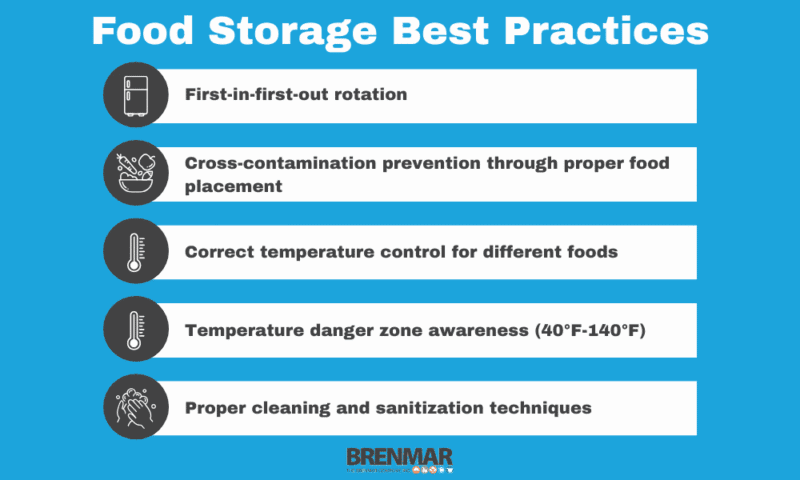
Training staff on proper storage procedures includes:
- First-in-first-out (FIFO) rotation methods
- Cross-contamination prevention through proper food placement
- Correct temperature control for different foods
- Temperature danger zone awareness (40°F-140°F)
- Proper cleaning and sanitization techniques
Common Challenges and Solutions
Short on space? Use clear storage containers to prevent bacterial growth and quickly identify contents. Install adjustable shelving to accommodate potentially hazardous food items. Implement zone storage – separate raw from ready-to-eat items and hazardous food from non-allergenic items.
Peak periods? Start by pre-portioning commonly used TCS foods, which saves valuable time during service. Set up mobile storage units strategically throughout the kitchen to ensure quick access to essential items. Create designated prep areas that help minimize traffic flow and prevent foodborne illness. Implement clear labeling systems that enable food handlers to quickly identify and retrieve items without confusion. Finally, maintain well-organized par levels for high-turnover items to ensure smooth service and prevent shortages during busy periods.
Emergencies like power outages or equipment failures? Have a plan. Have backup power sources ready for time-temperature control of refrigeration units. Keep a supply of dry ice on hand. Maintain relationships with nearby facilities for temporary storage if needed. Post clear instructions for staff on when to dispose of temperature-compromised items.
Essential Food Storage Best Practices: Your Complete TCS Food Guide
Proper TCS food storage combines careful temperature control, organized storage systems, and regular safety checks to prevent foodborne illness and reduce waste. By following the guidelines outlined above—including strict time-temperature control, proper container use, clear labeling practices with expiration dates, and regular monitoring—your retail or prep kitchen can maintain food safety and quality. These practices not only protect your customers but also help control costs by extending shelf life and preventing bacterial growth.
Ready to take your storage setup to the next level? Brenmar offers professional-grade TCS food storage solutions, including temperature-resistant containers, food-safe storage bags, and durable labeling products designed specifically for retail and foodservice operations. Our expert team can help you select the right products to meet your specific temperature requirements and storage needs.
Contact Brenmar today to explore our complete line of food safety and storage products. Let us help you build a reliable TCS food storage system that keeps your operation running smoothly and safely.