



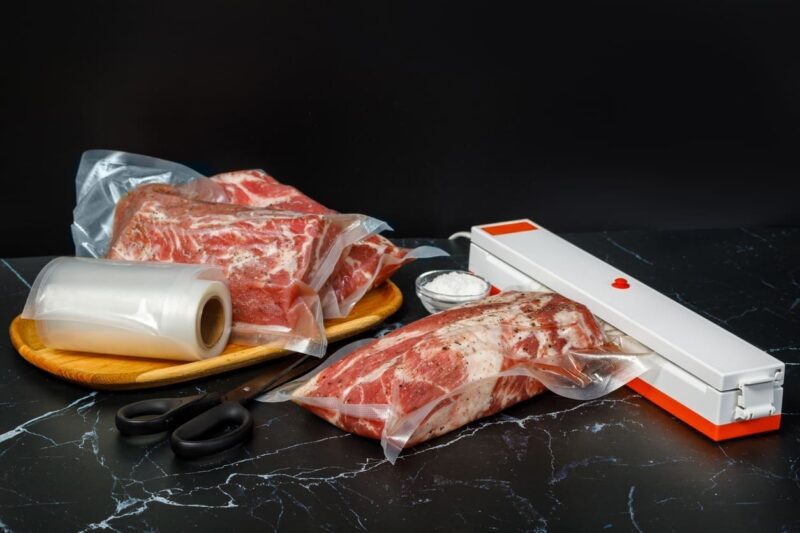
Vacuum Sealing Meat: Shelf Life, Storage Tips, and Warning Signs of Spoilage
The Short Answer: Vacuum-sealed raw meat lasts 1-2 weeks in the refrigerator and has extended freezer storage times of 6-12 months when properly vacuum-sealed and stored. The shelf life varies by type of meat, with ground meat having a shorter shelf life than whole cuts.
Vacuum sealing is a practical way to extend meat’s shelf life by removing air that leads to spoilage. This vacuum packaging method blocks out oxygen that bacteria need to grow, helping vacuum-sealed meat stay fresh up to five times longer than traditional methods of storage. While many people think vacuum sealing automatically makes meat products last for months, proper storage conditions and handling are just as important as the vacuum seal itself.
Understanding Vacuum Sealing Basics
Vacuum sealing is a packaging method that removes oxygen from food packaging using suction technology. The vacuum-sealed food creates an airtight seal that protects against spoilage and extends shelf life significantly.
How Vacuum Sealing Works
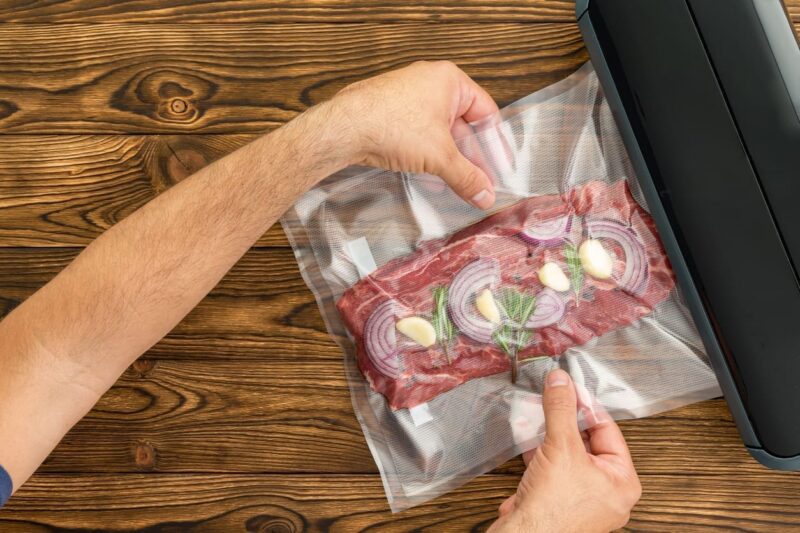
The vacuum packaging process uses specially designed vacuum bags and a vacuum sealer to remove air from around food. As the machine pulls out oxygen, it creates a tight barrier that prevents exposure to elements causing food deterioration. This sealed environment slows bacterial growth and oxidation that normally lead to spoilage.
Types of Meat Suitable for Vacuum Sealing
Different types of meat work well with vacuum-sealed meat storage:
Red Meat
Steaks and roasts maintain quality for 6-12 months when frozen
Ground meat stays fresh for 3-4 months in freezer storage
Poultry
Whole chickens and parts last 9-12 months in the freezer
Should be used within 2-3 days if refrigerated
Fish/Seafood
Fresh fish and seafood keep 3-6 months frozen
Must be removed from vacuum packaging before thawing to prevent bacterial growth
Equipment and Proper Technique
To vacuum seal meat properly, you’ll need:
A vacuum sealer machine
Clean cutting board and knife
Paper towels for drying meat
For best results when sealing:
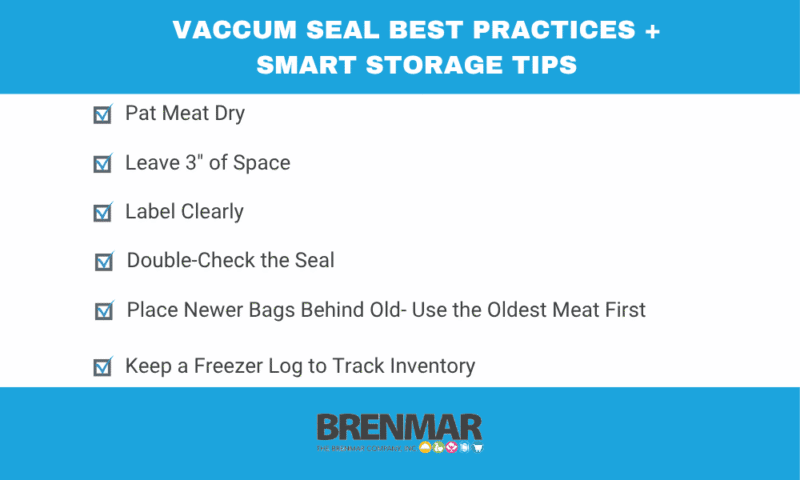
Pat raw meat completely dry before packaging
Leave 3 inches of space above the meat for a proper seal
Smooth out any wrinkles in the vacuum bag
Double-check seals are complete with no gaps
Label packages with contents and expiration date
Following proper technique helps prevent freezer burn and maintains food quality during long-term storage. Always work in a clean environment and handle raw meat safely to avoid contamination.
Storage Times and Temperature Guidelines
Refrigerator Storage (34-40°F)
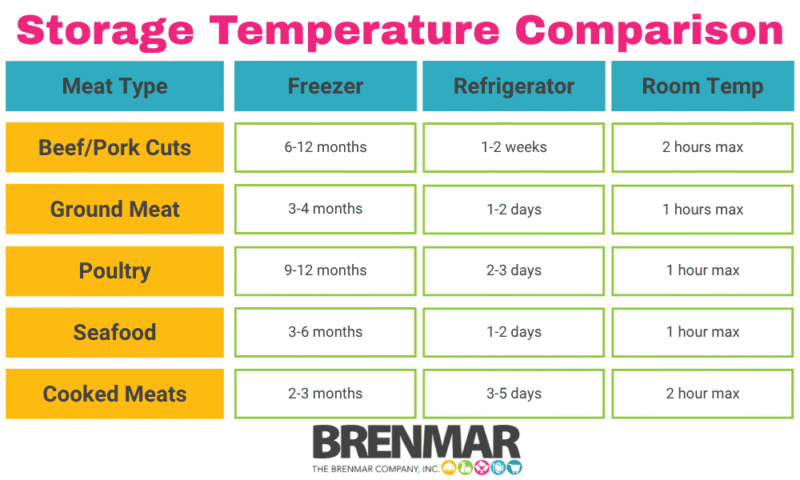
Raw meat stored in vacuum-sealed packaging maintains its shelf life for different durations in the refrigerator. Vacuum-sealed meat like beef and pork cuts last 1-2 weeks, while ground meat should be used within 1-2 days. Fresh meat poultry keeps for 2-3 days, and seafood stays fresh for 1-2 days. For vacuum-packed meat products, consume within 3-5 days when properly sealed and refrigerated.
Freezer Storage (0°F or below)
Vacuum sealing significantly extends freezer storage times and prevents freezer burn. Vacuum-sealed food like beef and pork cuts maintain quality for 6-12 months, ground meat for 3-4 months, and poultry for 9-12 months. Seafood remains good for 3-6 months, while vacuum-packed food like cooked meats last 2-3 months. Remember that while frozen foods stay safe indefinitely at 0°F, quality gradually declines over time.
Room Temperature Guidelines
Even with vacuum packaging, meat should never stay at room temperature for extended periods. Raw meat requires immediate refrigeration. During transport, use coolers or insulated bags with ice packs to maintain safe temperatures below 40°F. The maximum time any type of meat should spend in the temperature danger zone (40-140°F) is 2 hours, or just 1 hour if the ambient temperature exceeds 90°F.
Best Practices for Long-Term Storage
Pre-Sealing Preparation
Start with properly cleaned fresh meat, removing any excess fat or unwanted portions. Pat the meat completely dry with paper towels – moisture can compromise the airtight seal. Portion your raw meat into meal-sized amounts before vacuum sealing – this prevents having to reopen and reseal larger portions. Choose high-quality, food-grade vacuum sealer bags designed specifically for freezer storage and optimal shelf life.
Storage Environment Control
Keep vacuum-sealed meat at a consistent temperature of 0°F (-18°C) or below. Avoid storing vacuum-packed food in areas where temperatures fluctuate, like near the freezer door. Monitor humidity levels, aiming for 30-50% relative humidity to prevent freezer burn. Store vacuum packaging away from direct light exposure, which can affect meat shelf life over time.
Smart Organization System
Label each vacuum bag clearly with:
Type of meat
Weight/portion size
Packaging date
Expiration date (3-12 months depending on meat products)
Arrange vacuum sealed food by date, using a “first in, first out” rotation method. Keep older packages toward the front for easy access. Maintain an inventory list to track what’s stored and when it needs to be used. Consider grouping similar cuts together for simple organization.
Store vacuum-sealed packages flat in a single layer until frozen solid. Once frozen, you can stand packages upright or stack them to maximize freezer space. Leave enough room between packages for proper air circulation. Regular checks of seal integrity help catch any potential storage conditions issues early.
Vacuum Sealing Meat: A Smart Storage Solution
Proper vacuum packaging of meat relies on three main guidelines: storage conditions, packaging quality, and shelf life duration. Raw meat can last 1-2 weeks refrigerated and up to 12 months in freezer storage, while ground meat requires faster use within 1-2 days refrigerated or 3-4 months in the freezer.
Watch for these warning signs that vacuum-sealed meat has spoiled: unusual brown or gray coloring instead of normal red tones, unpleasant odor when the vacuum package is opened, and slimy or sticky texture changes to the meat’s surface. Any of these indicators means you should discard the meat products immediately.
Looking to maximize your meat shelf life while maintaining quality? Brenmar offers professional-grade vacuum packaging bags designed specifically for both home and commercial food storage. Our vacuum sealer bags provide airtight seals that help prevent freezer burn and extend shelf life. Shop our site or contact Brenmar to learn more. With proper vacuum sealing and storage conditions, you can keep fresh meat longer while reducing food waste.