
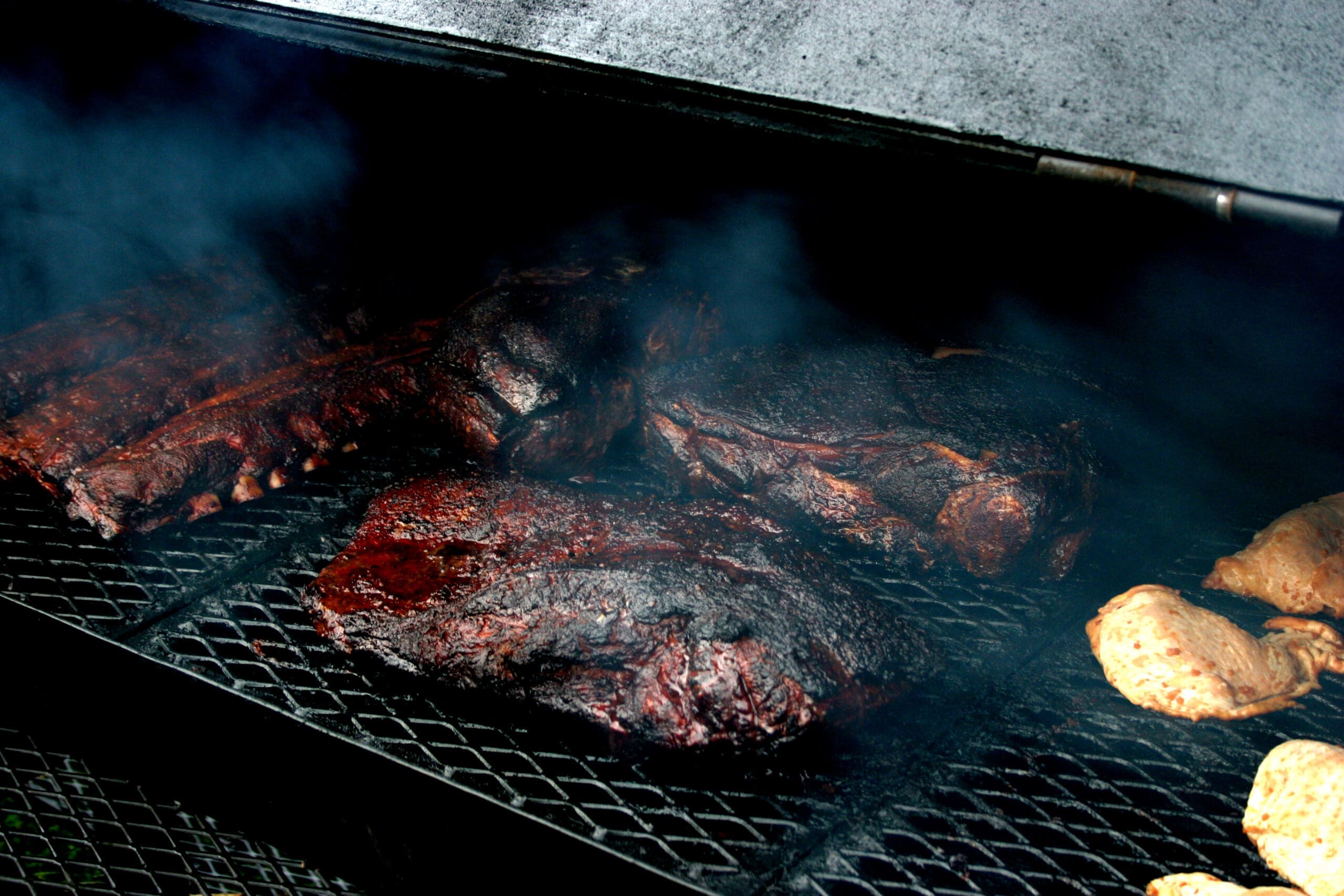
When smoking a brisket, the wrapping technique you choose can make the difference between good and great barbecue. Butcher paper has become a favorite among Texas pitmasters and backyard grillers alike, offering the perfect middle ground between leaving meat unwrapped and using foil. This uncoated, food-grade paper allows the meat to breathe while retaining just enough moisture, helping create that sought-after balance of tender meat and crispy bark.
The tradition of wrapping brisket in butcher paper started in Central Texas barbecue joints, where pitmasters discovered it offered better results than aluminum foil. The paper’s porous nature lets excess moisture escape while still protecting the meat from drying out during the long smoking process. This method also helps push through the “stall” – that frustrating period when the meat’s internal temperature plateaus – without sacrificing the prized exterior bark that delivers such incredible flavor and texture.
Many competition barbecue teams now rely on butcher paper as their secret weapon for achieving consistent, high-scoring results. By controlling moisture levels and smoke exposure, this simple yet effective wrapping method helps deliver the kind of brisket that keeps people coming back for more.
Gathering Your Materials and Prep Work
Choosing the Right Butcher Paper
Pink butcher paper is the top choice for wrapping brisket. Look for uncoated, food-grade paper that’s thick enough to hold up during long smoking sessions. For a whole brisket (12-14 pounds), you’ll need a roll at least 24 inches wide to provide proper coverage. Regular kraft paper or treated paper products won’t work – they can leach chemicals into your meat or fall apart during the cooking process.
Required Tools
Before you start wrapping your brisket, gather these items:
- Clean, flat work surface large enough for your meat
- Food-safe gloves to handle the meat
- Reliable meat thermometer
- Kitchen shears or scissors
- Butcher paper
Timing Your Wrap
Watch for two main signals that tell you it’s time for wrapping:
- Internal temperature reaches 165°F
- The bark (outside crust) has developed a dark mahogany color and feels firm when gently pressed
The right moment typically comes during “the stall” – when the internal temp stops climbing for several hours. This usually happens around 165°F. The bark should be well-formed but not too hard or crispy. If you wrap too early, you’ll miss out on proper bark formation. Wait too long, and you risk drying out the meat.
This timing varies based on factors like smoker temperature, meat size, and weather conditions. Keep your thermometer handy and check both the internal temperature and bark development regularly after the first 4-5 hours of smoke.
Step-by-Step Wrapping Brisket Technique
Setting Up Your Workspace
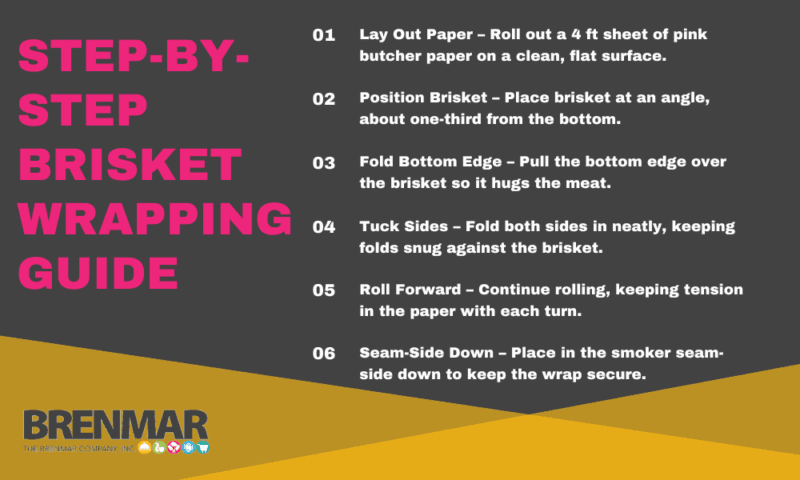
Start with a clean, flat surface that gives you plenty of room to work. Roll out a sheet of pink butcher paper about 4 feet long—this gives you enough material to wrap even large whole briskets. Position the butcher paper so the long edge runs parallel to the counter’s edge. Have your cooked brisket nearby, along with a spray bottle of water to help tighten the paper if needed.
Basic Wrapping Steps
Place your brisket in the center of the paper, positioning it at an angle with the point end facing the top corner. The meat should sit about one-third of the way up from the bottom edge. For the first fold, lift the bottom edge of the butcher paper and pull it tightly over the brisket, making sure it fits snug against the meat.
Next, fold in both sides of the paper, creating neat, angular tucks similar to wrapping a present. Keep these folds tight against the brisket’s sides to prevent any gaps. Starting from the bottom, roll the brisket forward, maintaining tension in the paper as you go. Each roll should slightly overlap the previous one.
Avoiding Common Problems
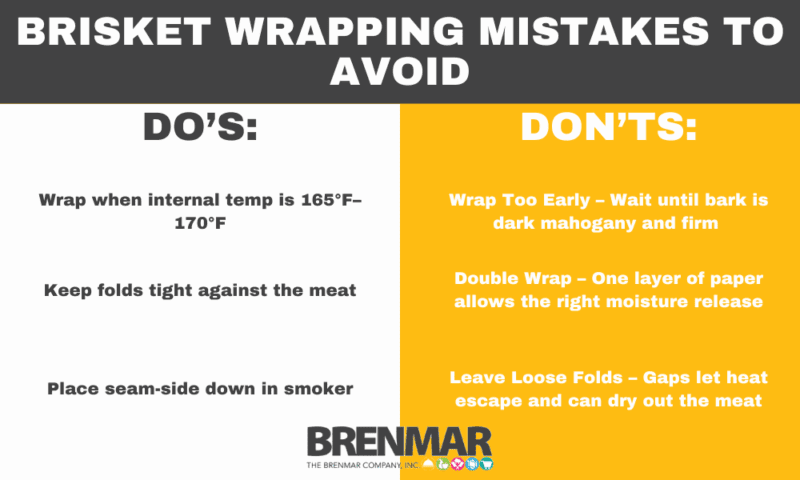
Watch out for loose wrapping—the paper should hug the meat firmly but not so tight that it tears. Place the final seam on the bottom of the wrapped brisket to prevent it from coming undone during the cooking process. Don’t double-wrap your brisket, as a single layer of butcher paper provides the right balance of moisture retention and bark formation. The finished wrap should look neat with no loose corners or gaps where smoke could escape.
Once wrapped, return the brisket to the smoker with the seam side down. This keeps the package secure throughout the rest of the cooking process.
Handling and Cooking Tips Post-Wrap
Safe Handling After Wrapping
Once your wrapped brisket is secured in butcher paper, use both hands to lift it, supporting the weight evenly. Place one hand under each end of the meat to prevent tearing the paper or dropping the brisket. Keep the package level when moving it to maintain the collected juices inside.
Temperature Monitoring
Insert your meat probe through the pink butcher paper into the thickest part of the flat, avoiding any fat pockets. The probe should slide in smoothly without resistance. Check the internal temperature every hour after wrapping until you reach 195°F to 203°F. The paper won’t affect your probe’s accuracy, so there’s no need to unwrap for checking.
Resting Period Guidelines
Let your wrapped brisket rest for at least 1 hour, though 2-3 hours produces better results. During this time, the meat’s internal temp will slowly drop to around 140°F-150°F. Keep the brisket wrapped in its butcher paper during the entire rest period. You can place it in a clean cooler or warming oven to hold the temperature longer.
Storage Tips
For short-term holding (2-4 hours), place the wrapped meat in a clean cooler. Add a towel at the bottom for insulation. The butcher paper will continue to let the brisket breathe while holding moisture. If you need to store leftovers, let the meat cool completely while still wrapped, then transfer to an airtight container. The original paper wrap should be replaced for storage, as it will have absorbed moisture during the cooking process.
Remember to handle your wrapped brisket gently at all stages to maintain the paper’s integrity and keep those flavorful juices locked inside. The paper’s natural breathability helps the meat stay moist without getting soggy, giving you that perfect flavor when it’s time to serve.
Ready to Wrap Brisket?
Successfully wrapping a brisket in pink butcher paper comes down to timing, technique, and using the right materials. Remember to wrap when the meat reaches an internal temperature of 165°F-170°F, use two overlapping sheets of butcher paper, and maintain a tight seal while allowing some moisture release. A properly wrapped brisket should have clean folds, stay secure throughout the cooking process, and help achieve that perfect balance of moisture and bark formation.
The right supplies make all the difference in your smoking results. Start with high-quality, food-grade butcher paper that’s thick enough to hold up during long brisket cooks. Keep your wrapping station clean and organized with a flat work surface and sharp scissors nearby. For consistent results, store your paper in a dry place and always check for tears before use.
Ready to step up your brisket game? Visit Brenmarco.com to browse our selection of premium food-grade butcher paper and butcher supplies. With over 30 years of experience serving food service professionals, we offer reliable products that deliver professional results. Contact us today to speak with our knowledgeable team about finding the perfect supplies for your needs.